The AI tool stack I'd build for a Shopify store in 2026
What I'd install on day one, what I'd wait on, and what I'd stop paying for entirely if I were starting a Shopify store in 2026. Six or seven tools, mostly Shopify-native, around $62 a month.
What I'd install on day one, what I'd wait on, and what I'd stop paying for entirely if I were starting a Shopify store in 2026.
Quick answer. A Shopify store in 2026 needs three to five paid tools, not twenty-five. Shopify Email for campaigns and flows (free up to 10K sends/month, Sidekick writes the copy in admin), Shopify Knowledge Base feeding the AI agents that now drive 13x more orders YoY, Lily AI for product attributes (it's how your products get found in ChatGPT search), Photoroom Pro for product photography, Pippit for ad video, and either Postiz or Buffer for social. Real monthly cost: roughly $40 to $70. A full ecom-tools stack typically runs $700 to $1,200, and most of those line items now have a free native Shopify replacement that didn't exist 12 months ago.
What I'd actually install on day one
If a friend launched a Shopify store this week and asked what to install, the list would be shorter than they'd expect. Six paid tools, three of them under $25 a month, and a handful of free Shopify-native apps that didn't exist last year. The category most operators worry about first (AI chatbots) wouldn't be on it at all.
That's a different shape than I would have given a year ago. Some of what I'd have recommended doesn't exist anymore: Yotpo's email and SMS product shut down in December, Sendlane got acquired by Privy in February, Bench shut down on December 27, 2024, Genie sunset last August, and Stocky stops working entirely on August 31, 2026. A few more got priced past what a small store can absorb: Klaviyo's active-profile billing shift is pushing seasonal-list stores down a tier, and Gorgias started double-billing AI tickets at roughly $1 each.
And a third of what's left got replaced by Shopify itself in Winter '26. Sidekick now builds apps, edits themes by natural language, runs native A/B tests through Rollouts, and answers customer questions via the new Knowledge Base app. Sidekick Pulse proactively flags performance opportunities in admin without you asking. Agentic Storefronts syndicates your catalog directly to ChatGPT, Perplexity, Microsoft Copilot, and Google AI Mode, where AI-referred orders grew 13x year-over-year in Q1 2026 with 56% better conversion than organic SEO across most categories.
Put all of that together and the stack you should run today looks meaningfully different from the one you would have built six months ago. This is what I'd actually use, category by category, with the indie picks worth flagging, the consensus picks where the consensus is wrong, and the categories I'd stop paying for entirely.
How I filtered
One filter: if this tool disappeared tomorrow, would my revenue change?
If the answer is "no" or "I'm not sure," the tool isn't earning its money. Most "AI for ecommerce" tools fail this test. They bill monthly, they do something, but the something doesn't translate into a number you can point to.
The tools that pass the filter share a pattern: they're tied to a transactional moment, or they're the layer that makes you findable. A customer is looking at a product. A customer is in their email. A customer's AI agent is asking ChatGPT which jewelry brand to recommend. The tools that move revenue in 2026 do work at one of those moments. Tools that sit one layer back (analytics dashboards, AI personalization engines that need ten thousand visitors to find a pattern, AI chatbots that need traffic you don't have) are real categories. They're just not your problem yet.
A related signal: Gartner predicted in 2025 that over 40% of agentic AI projects will be cancelled by end of 2027 due to unclear ROI. A separate analysis put the share of products marketed as "AI agents" that are actually rebranded chatbots or workflow automation at around 95%. The "AI tool stack" pitch is mostly built on top of that 95%. Filtering it out is the whole exercise.
Email and SMS marketing
This category got rewritten in 2025-2026 and most recommendations still point to dead products.
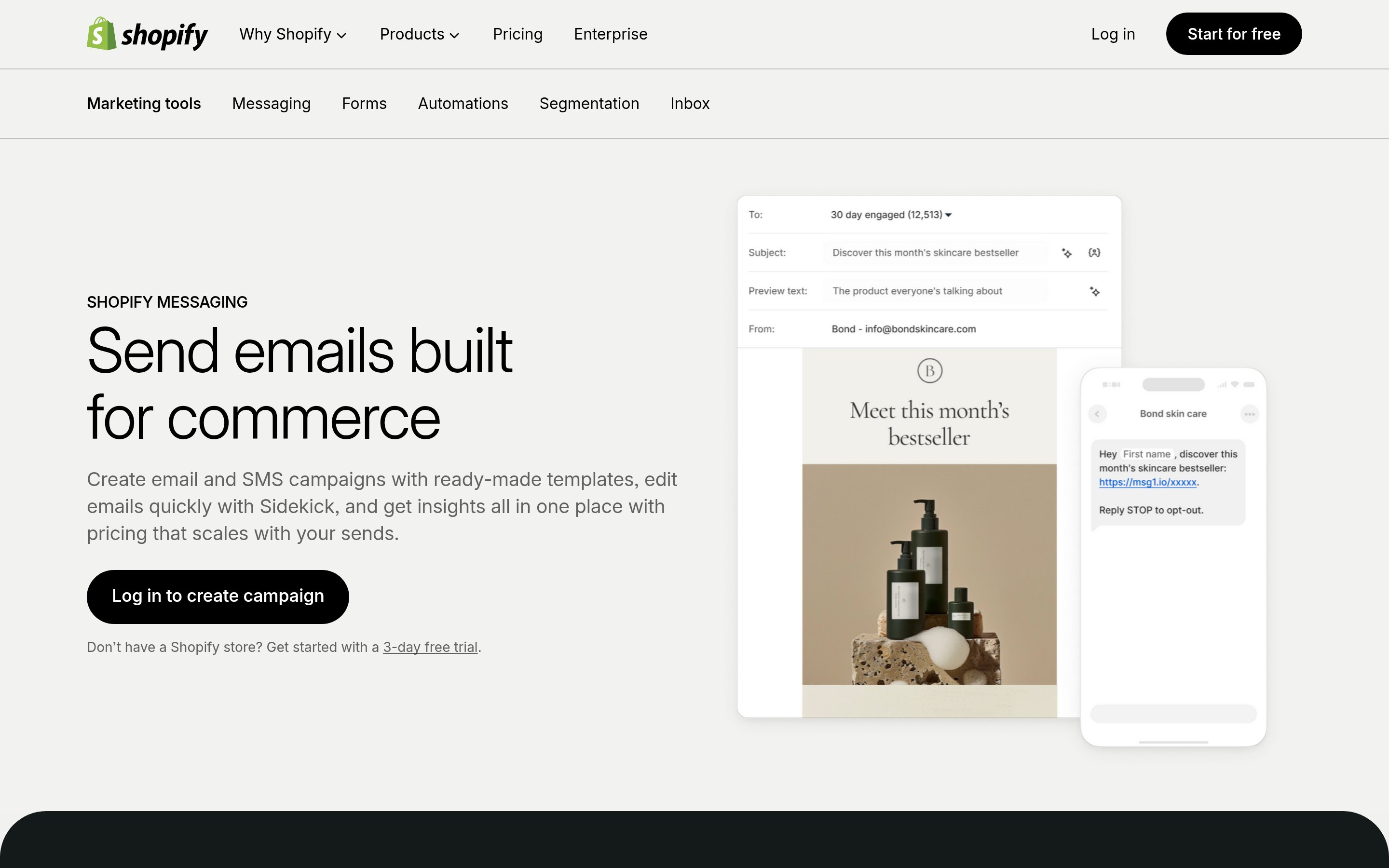
What 2026 changed: Yotpo Email and SMS are discontinued. Sendlane was acquired by Privy and is no longer standalone. Klaviyo's active-profile billing shift on Feb 18, 2025 is pushing seasonal-list stores down a tier. And Shopify Email quietly became the dark-horse default after Winter '26 added Sidekick-generated campaign copy, 10,000 free sends a month, and $1 per 1,000 after that.
The indie pick nobody's covering: Shopify Email itself. Patrick Coddou, founder of Supply (acquired) and a longtime ecom Twitter voice, has talked about running his newer M1 Skis brand on Shopify Email with zero extra apps. That's the opposite of the 30-app stack he ran at Supply. If you're under roughly 2,000 active profiles with no formal flow strategy yet, Shopify Email + Sidekick is now genuinely enough. The four flows (welcome, abandoned cart, browse abandonment, post-purchase) drive roughly 41% of email revenue; you can build all four in Shopify Email's flow editor in a day, with Sidekick writing the copy.
The graduation pick: Omnisend at $16/month, when you hit Shopify Email's send caps or you want SMS bundled. Omnisend's own comparison content admits the divide: Klaviyo if you're at $500K GMV or above, Omnisend if you're below.
The far-future pick: Klaviyo, above $500K GMV when their flows and predictive features start outperforming the cheaper options enough to offset the active-profile bill.
Skip in 2026: Yotpo Email (doesn't exist), Sendlane as a standalone (also doesn't exist), Postscript SMS at $25/month minimum even if you send zero messages. Attentive is still enterprise sales-cycle.
Site search and product discovery (the agentic-search story)
This category got harder to write about in 2026 because the real action moved off your store entirely.
What 2026 changed: Shopify shipped Agentic Storefronts in March 2026. Your products now get discovered directly inside ChatGPT, Perplexity, Microsoft Copilot, and Google AI Mode. Shopify reports AI-referred orders growing 13x YoY in Q1 2026, with 14% higher AOV than organic search and 56% better conversion in 23 of 25 categories.
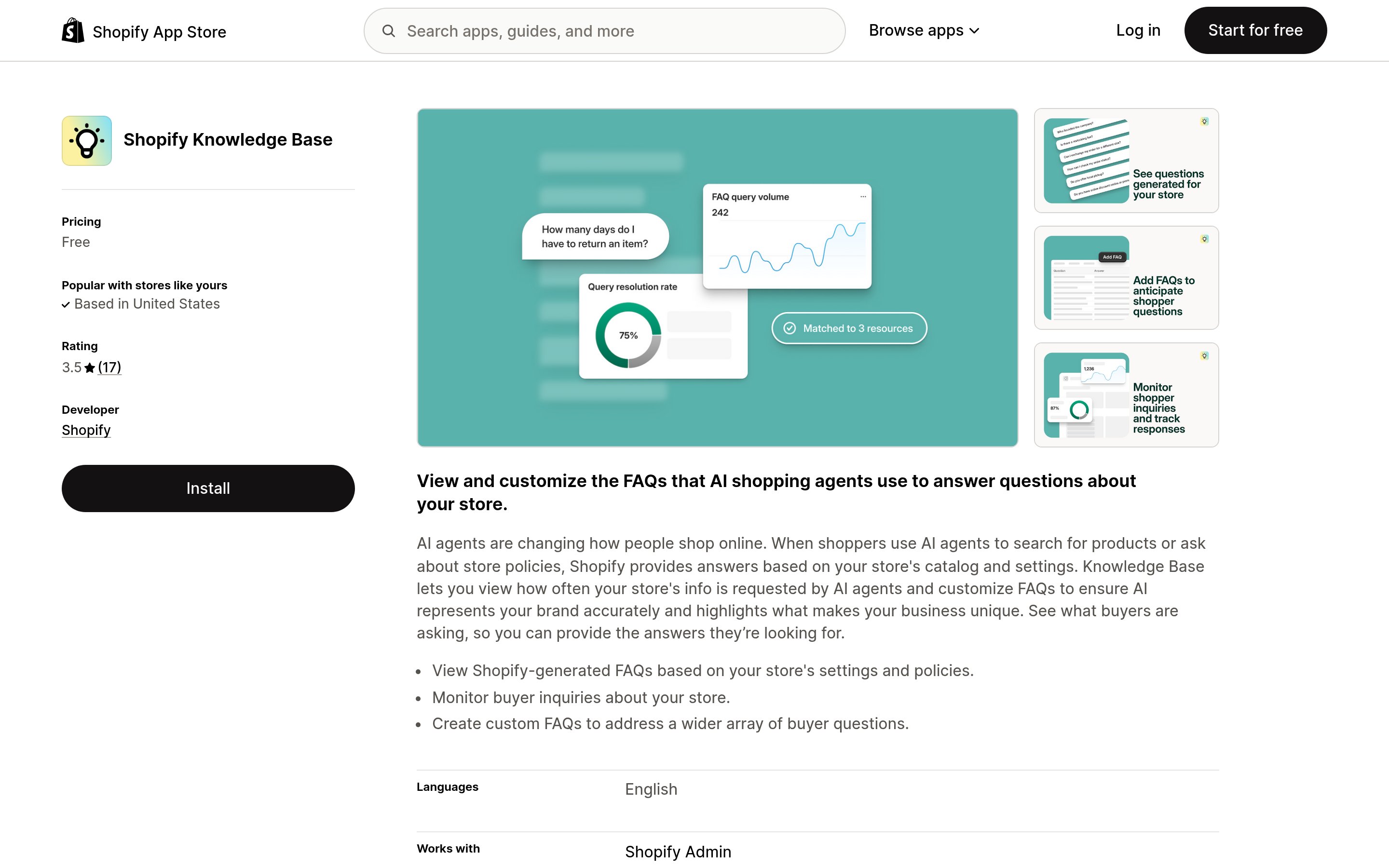
The indie pick nobody's covering: Shopify Knowledge Base. Free, native, shipped Winter '26. It lets you control what AI agents say about your store, tracks which questions agents are asking most about your catalog, and feeds your policies and FAQs to ChatGPT, Perplexity, and Copilot. The agentic-search lift is the biggest shift happening to ecommerce right now, and Knowledge Base is the layer that decides whether you participate or not. Almost nobody is writing about it yet because it's free and three months old.
For on-store search itself: Shopify Search & Discovery (free, native) is still the right pick under roughly $50K/month in revenue. Klevu's own blog admits this directly: "Shopify's native search works well for smaller stores with simpler needs."
The graduation pick: Boost AI Search at $29/month, if your catalog grows past 500 SKUs or your product titles inherited from a supplier feed need cleaning.
Skip in 2026: Klevu starts at $449/month. Algolia and Searchspring start at $300+/month. These are mid-market catalog tools. You're paying for engineering capacity you can't use.
Product copy and SEO (rewritten for agentic search)
The brief used to be "write good descriptions." The brief in 2026 is "make sure your products use the attribute language LLMs actually match on." That's a different job.
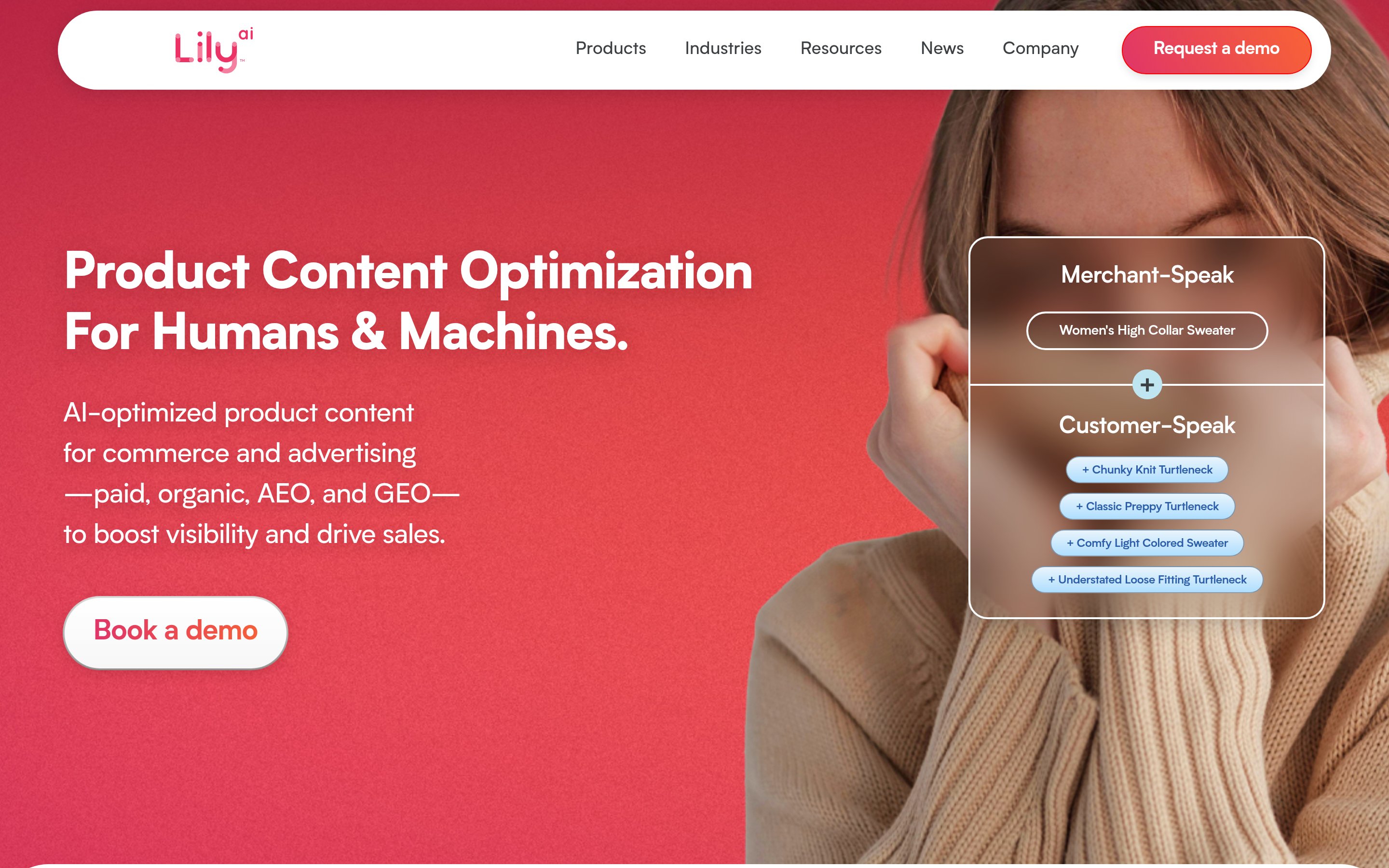
The indie pick nobody's covering: Lily AI for product-attribute enrichment. Lily AI's pitch is a 15,000-attribute taxonomy auto-applied to your catalog via a no-code Shopify integration. The unsexy version of what they do: they tag your products with the words shoppers (and shoppers' AI agents) actually use, so your catalog ranks in both on-site search and ChatGPT product queries. One client projected $7M-$48M in top-line lift from better attribution alone. If you're thinking about agentic-commerce traffic, this is the cheapest investment to make today.
For description writing itself: ChatGPT Plus at $20/month with a personal prompt template. Five example product descriptions in your voice, two or three don't-use words, your category and tone. Use it as your description generator. Skip the dedicated copy tools. There's no feature gap that justifies their markup over a generalist LLM in 2026.
Shopify Magic is fine for a first draft of one description (it now accepts competitor URLs, target personas, and SEO keyword targets as inputs) but reviewers consistently flag that running the same prompt on different products produces wildly different output, which makes catalog consistency hard. Use it for one-off drafts, not as a workflow.
Skip in 2026: Jasper at $39/month, Copy.ai at $36/month, Writesonic, Hypotenuse. The dedicated AI copy tools have lost their moat. Magic + ChatGPT covers the use case at a quarter the cost.
Product photography
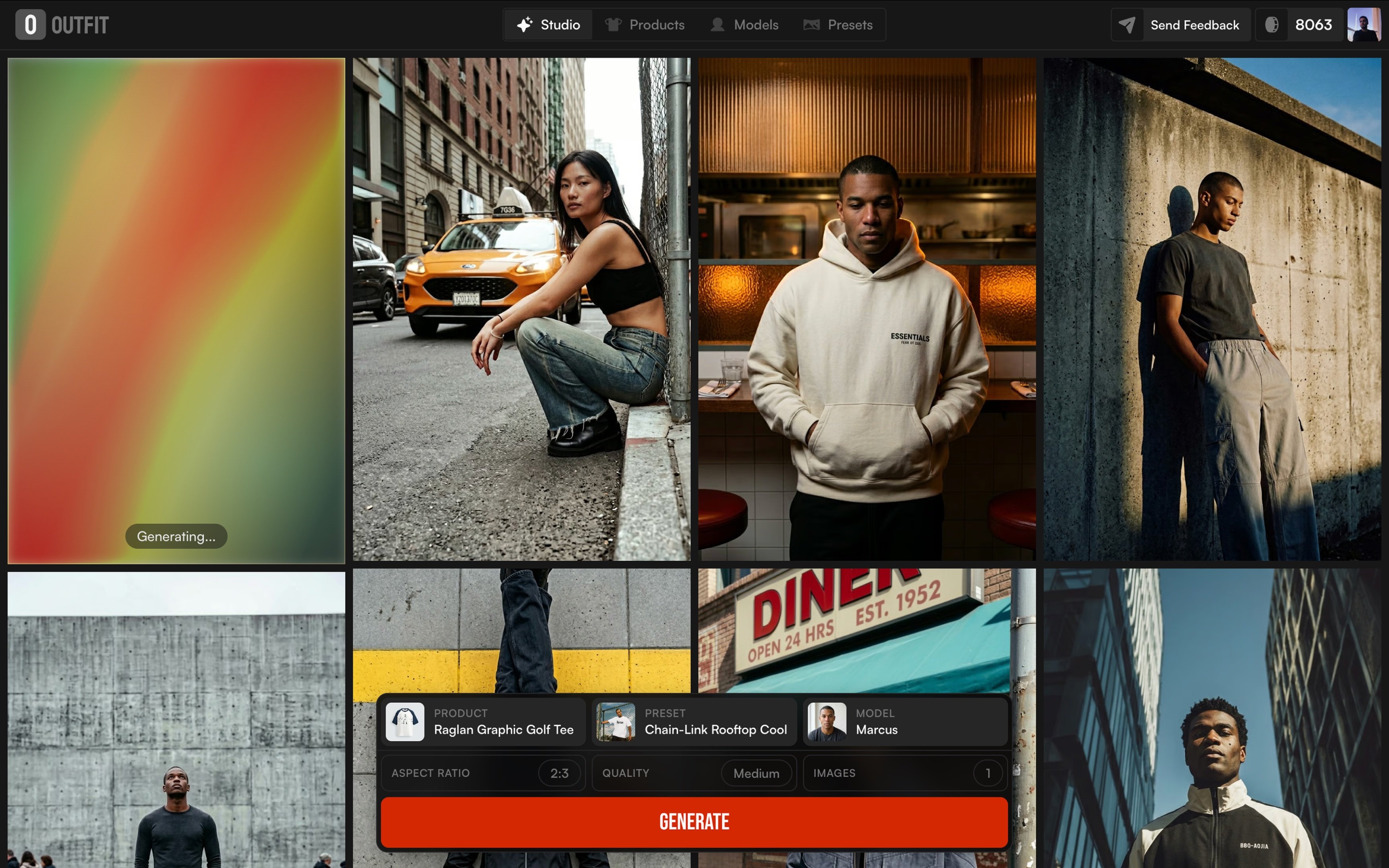
This is where the ROI math is the most obvious in the entire stack. Traditional product shoots run $200 to $5,000 per session. AI product photography lands per-image cost between $0.10 and $2.00. If you're shooting 30 SKUs, the savings pay for the rest of your stack three times over.
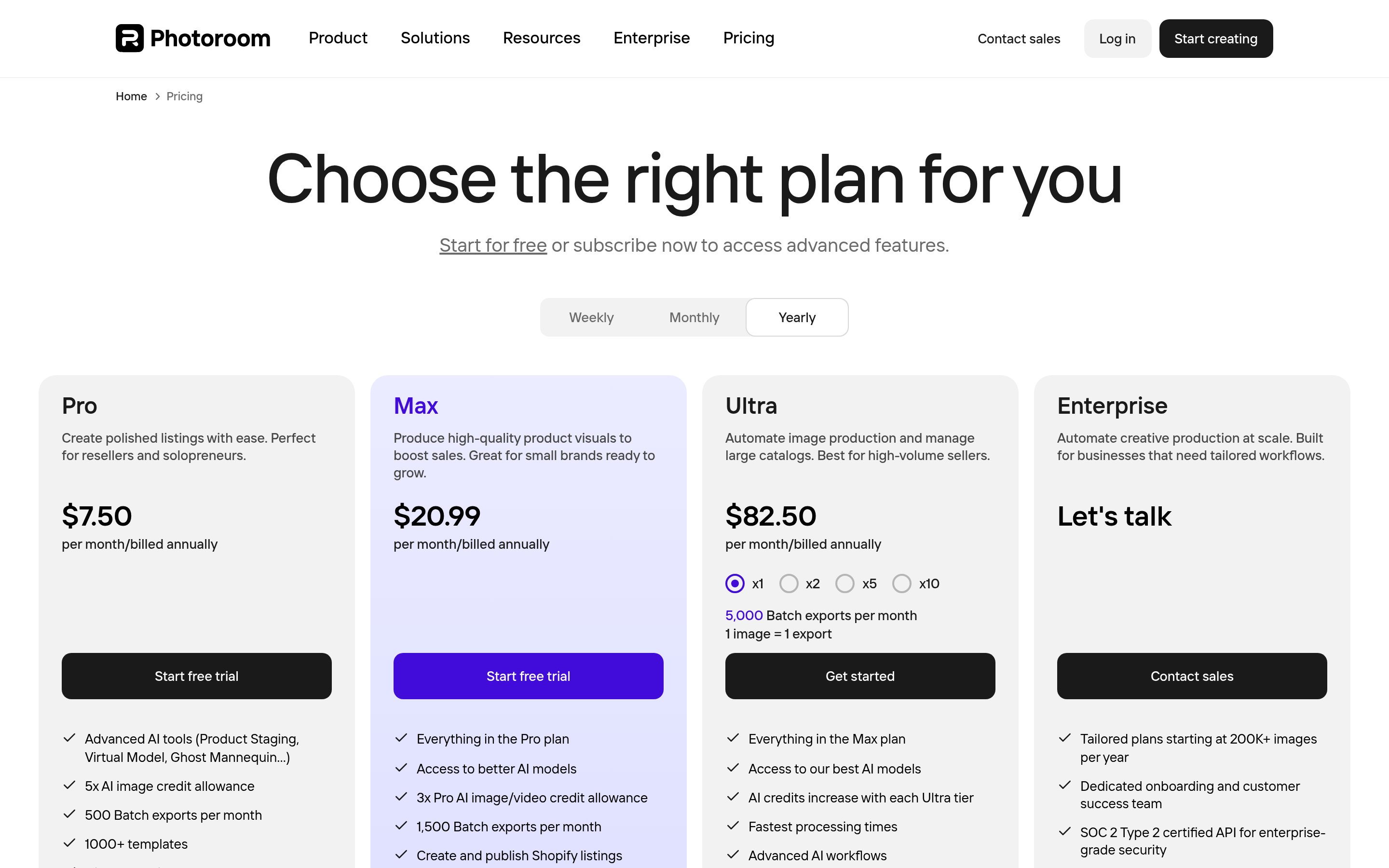
My pick: Photoroom Pro at $12.99 a month ($7.50 annual). Shopify-native batch publishing inside the same interface, decent fidelity on most product categories, predictable monthly billing. The right pick if you shoot consistently every month.
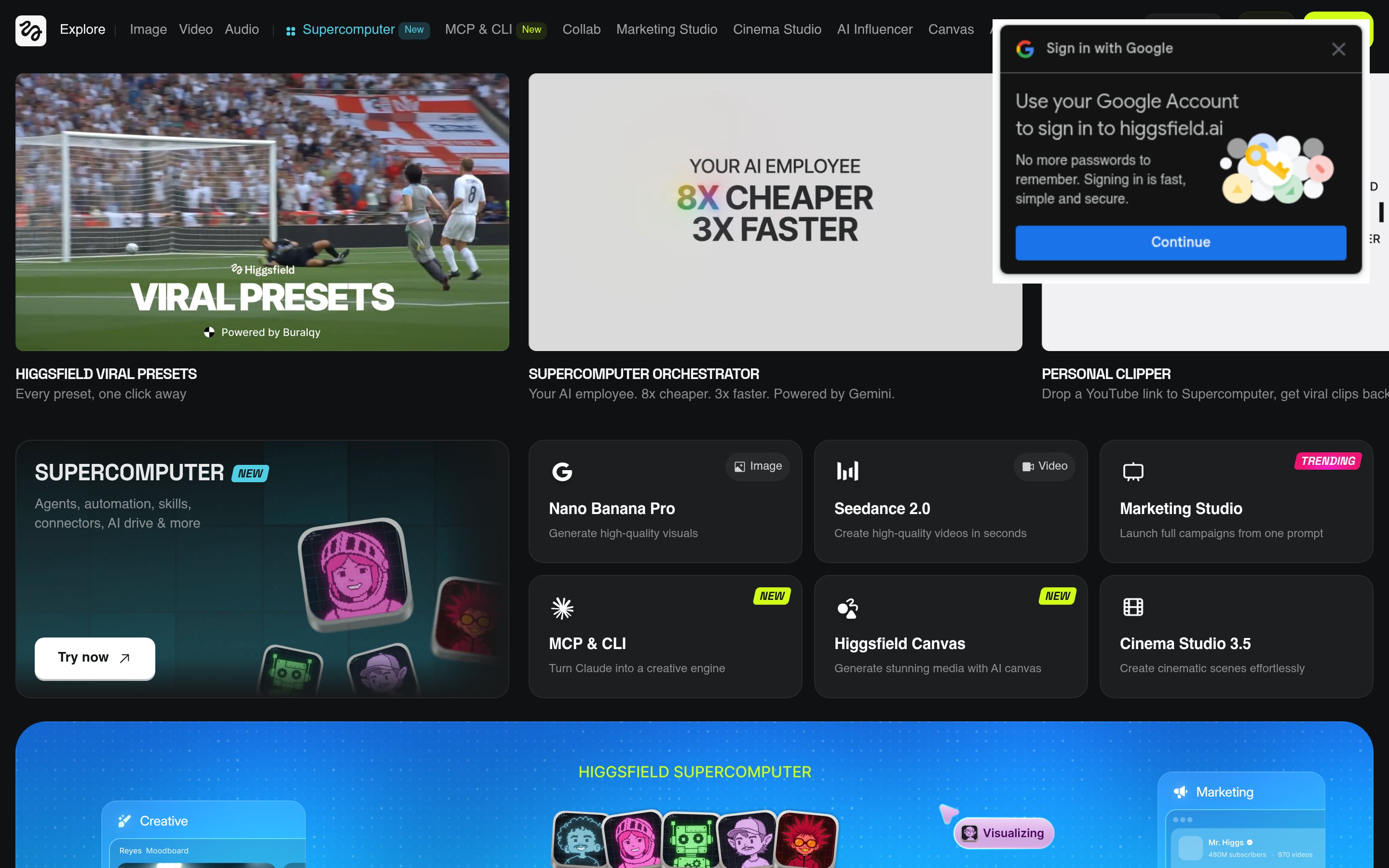
Worth a look for ads specifically: Higgsfield Marketing Studio (powered by Seedance 2.0). Higgsfield closed a $1.3B valuation round in January 2026. Paste a product image or URL, get end-to-end ads across nine styles including UGC, TV spots, unboxing, reviews. Different category from straight product photography. If you specifically need ad creatives generated from product images, Higgsfield is the most-resourced product in the space right now.
Skip in 2026: Pebblely caps out fast. Booth.ai has gone quiet. No 2026 launch story, usage signals are declining. Midjourney and DALL-E for actual product shots is a trap; they don't preserve fidelity and you'll spend more time fixing the output than you saved generating it.
Also worth noting on category direction: Greg Isenberg called out AI product mockups for Shopify sellers as a $100K/mo SaaS opportunity in 2025. The category is still wide open, more players coming. Expect the indie picks here to keep shifting.
Ad creative
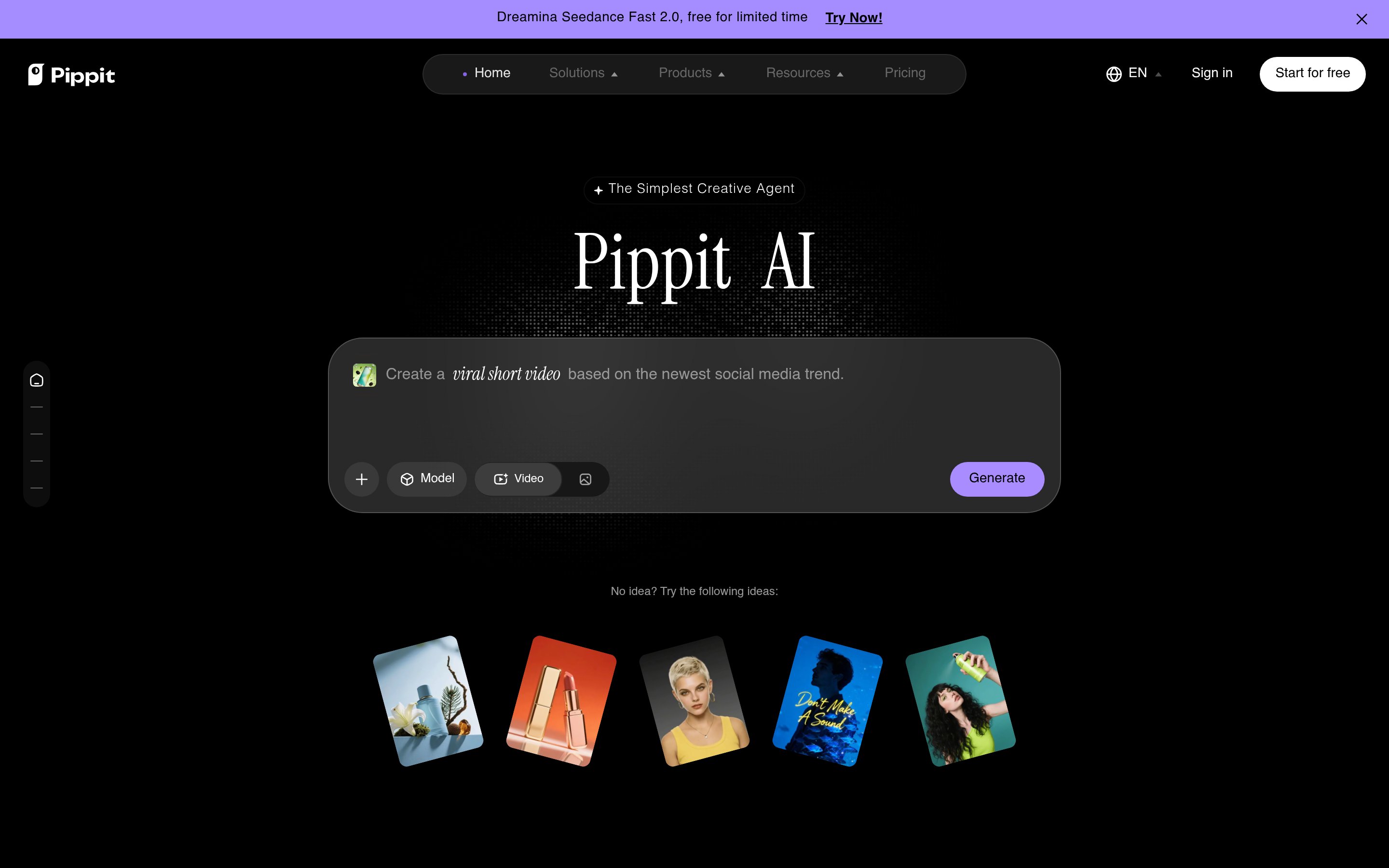
The indie pick nobody's covering: Pippit, built by CapCut/ByteDance, purpose-built for Shopify, Amazon, and TikTok Shop sellers. Paste a product URL, get vertical video tuned for TikTok and Reels with AI avatars, voiceovers, and scripts generated from your product copy and reviews. The distribution moat is the killer. ByteDance owns CapCut (the video editor most TikTok creators already use) and has a first-class publishing pipeline to TikTok Shop. AdCreative.ai can't match that pipeline. Pippit is on the Shopify App Store with deep integration.
Layer above it: Foreplay at $49/mo on the Inspiration plan. Operators use Foreplay as the swipe-file/research layer that feeds Pippit and Arcads. It's not a creative generator. It's where you collect winning ads from competitors and organize them by hook, format, and offer.
Meta Advantage+ (free, native) is still the foundation underneath all of this. Advantage+ handles audience expansion, creative rotation, placement optimization, and dynamic asset combinations using your pixel and catalog. If you're not testing weekly, Advantage+ alone is more than enough.
For AI UGC video specifically, the category split (avatar talking-heads vs URL-to-ad agents vs faceless auto-publishing) is its own post. The short version: most stores don't need a UGC tool yet, and when they do, the three sub-categories don't overlap the way most write-ups imply.
Skip in 2026: AdCreative.ai. Once Pippit and Higgsfield landed, the output-quality gap became visible and the price advantage narrowed. Pencil/Genus AI, Creatify, Pebblely Ads. None solve a problem Meta Advantage+ plus one of (Pippit, Arcads, Higgsfield) doesn't already cover.
Social content scheduling
The indie pick nobody's covering: Postiz, open-source, $23-79/month. It ships a CLI, a REST API, and an MCP server so you can wire it directly into Claude or Cursor and have an AI agent do the posting for you. One founder publicly documented building an 8-15 posts/day pipeline across X, Instagram, TikTok, YouTube, and Facebook that hit $1,300 MRR with no paid ads, agent-driven, no manual scheduling. It also generates images and videos natively, which the legacy schedulers don't.

The defensible classic pick: Buffer (free or $6/channel/month) plus ChatGPT for drafting. If you don't want to wire AI agents into your posting pipeline, Buffer is still the cleanest and cheapest scheduler at small scale.
For Pinterest-heavy stores: Later. Later's visual planner is genuinely better than Buffer's for Pinterest specifically, and Pinterest still converts well for ecom. Don't skip the platform because Instagram looks shinier.
Skip in 2026: Hootsuite (priced for agencies, feature-bloated). The whole "AI social content" generator category (Predis, Ocoya, FeedHive) solves a problem you don't have. At small scale, you can write the post yourself faster than you can prompt an AI to write it for you. The job they solve is real at ten-person marketing teams, not at a two-person brand.
Reviews and UGC
Reviews stopped being a conversion-rate widget in 2026 and became a citation input. ChatGPT, Perplexity, and Google AI Overviews lean heavily on aggregated review signals to decide which products to recommend. Adobe's Q1 2026 data: AI-referred visitors convert 42% better and spend 37% more per visit than traditional organic. The takeaway: pick a reviews app that outputs clean schema and loads fast (Core Web Vitals still matter for AI ranking), not the one with the loudest marketing.
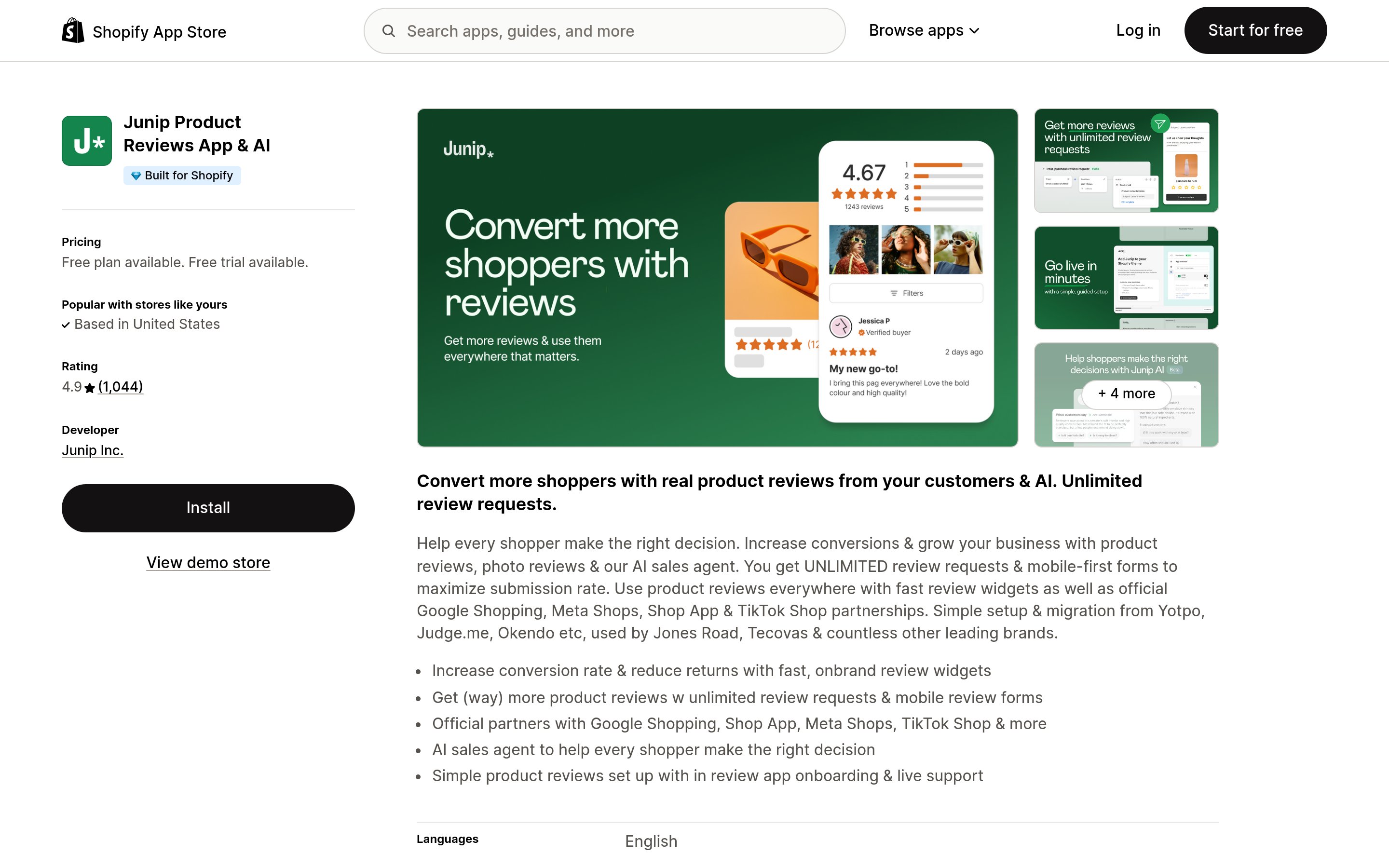
The indie pick nobody's covering: Junip. Modern GraphQL architecture, minimal JavaScript, the lightest performance hit of the major reviews apps. Unlimited review requests on every plan including the free tier. Native Klaviyo and Gorgias integrations. Junip still ranks below Judge.me on install count, but Junip's engineering was built for the AI-citation era.
The safe pick: Judge.me at $15/month on the Awesome plan. Still the 90%-of-stores default. Broad SEO schema coverage, real free tier, lowest-friction install. The right pick if you don't want to think about reviews infrastructure beyond making sure stars show up on product pages.
For photo and video UGC specifically: Loox at $12.99-$299/month. Three times the photo upload rate of Judge.me on the same store, and the cleanest path to pulling review media directly into ad creative.
Skip in 2026: Yotpo Reviews (the bundled-suite pitch doesn't survive small-store budgets, and the email/SMS arm is dead anyway). Stamped (killed its free plan). Okendo (priced for the era when reviews were a destination, not a citation input).
Customer support
The pick: Shopify Inbox (free) + Shopify Knowledge Base (free, Winter '26). Shopify Inbox got Magic-powered suggested replies and instant answers in the Winter '26 release; Knowledge Base trains the AI agents (Inbox's, ChatGPT's, Perplexity's) on your policies and FAQs. The combination is now genuinely competitive with Gorgias for stores under 500 tickets/month, and unlike Gorgias it doesn't charge per-resolution.
The 2026 change worth knowing: Gorgias AI Agent charges $0.90-$1.00 per resolved conversation on top of the ticket fee, so AI tickets are double-billed. Overages run $0.36-$0.40/ticket. The math compounds fast at small scale.
Counter-intuitive call: For pre-purchase product Q&A under 100 tickets/month, skip the AI chatbot entirely and write a great FAQ page. Feed it to Knowledge Base. Let Shopify Inbox's AI handle the rest. Cheaper, more honest, and the agentic-search distribution from Knowledge Base means your FAQ actually shows up in ChatGPT answers about your brand.
Upgrade trigger: Switch to Gorgias the day support eats more than 90 minutes a day, or you cross roughly 300 tickets/month, whichever comes first.
Honorable mention: Yuma AI if your stack already includes Gorgias or Zendesk and you want a dedicated AI resolution layer on top. Yuma reports 30-35% automated resolution rates. Note: it explicitly does not work as a standalone helpdesk.
Skip in 2026: Intercom Fin (per-resolution AI billing is brutal at small scale), Tidio Lyro, Re:amaze. None solve a problem you have under 300 tickets/month.
Operations: inventory, fulfillment, and returns
This category saw more consensus-pick mortality than any other in 2026. Stocky (Shopify's own inventory app) was delisted from the App Store on February 2, 2026 and stops working entirely August 31, 2026. Shopify is absorbing the basics (bin locations, multi-location flash-sale logic, "in progress" fulfillment status, removed 180-day adjustment cap) into native admin in Winter '26. Genie (the YC-backed inventory darling of 2024) sunset on August 31, 2025. Every recommendation that still names either of them is out of date.
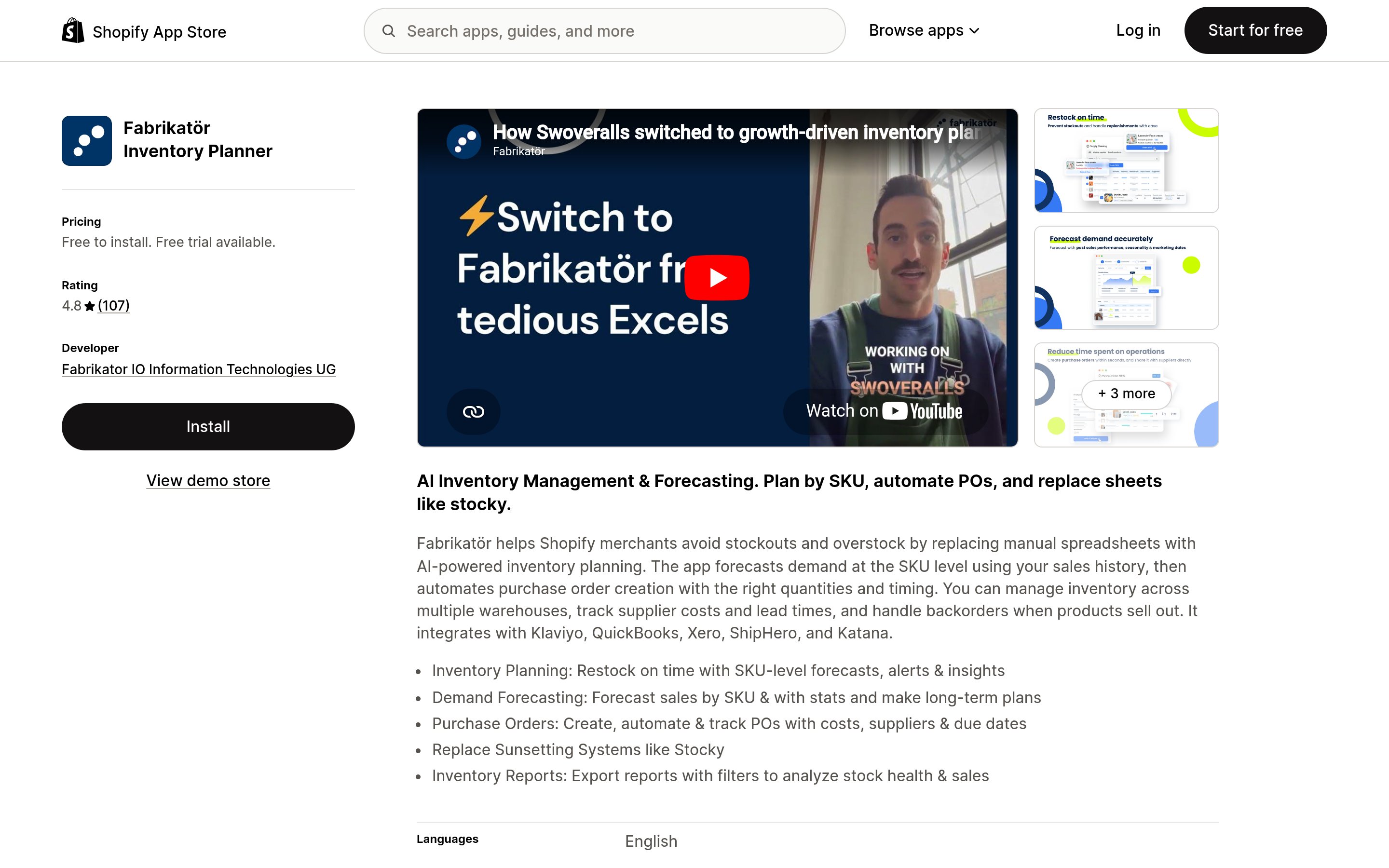
The indie pick nobody's covering: Fabrikatör at $99/month for stores under $500K annual revenue (scales to $149/month at $1.5M and $199/month at $2.5M). AI demand forecasting + automated purchase orders. Named as the Stocky successor in every credible migration guide. Shopify-native, fast to onboard, doesn't pretend to be an ERP.
For shipping: Pirate Ship (free forever, no markup, USPS Connect eCommerce rates up to 87% off retail). Native Shopify integration. USPS and UPS only. If you ship under 100 packages a month, this is genuinely the cheapest option in the category.
For returns: ReturnPrime (free tier, 4.9 stars). The Loop alternative for stores under 50 returns/month, without the per-return billing pattern that creeps up on you at scale.
Graduation picks: Cogsy at $199/month past $1M ARR for multi-channel inventory. Loop Returns at $299+/month once you're past 200 returns/month and need branded portals.
Skip in 2026: Stocky (dead), Genie (already dead), ShipStation (overbuilt for one channel at small scale), Shippo for Shopify stores (Pirate Ship is cheaper and integrates the same way), Loop Returns until you cross 200 returns/month.
Bookkeeping and tax
What 2026 changed: Bench abruptly shut down on December 27, 2024 and got acquired by Employer.com three days later. The customer base scattered, and that's what created the opening for ecom-native bookkeeping in 2025-2026. On the tax side, Illinois and Alaska both dropped their 200-transaction nexus thresholds. Economic nexus in most states is now purely revenue-based ($100K), which simplifies trigger logic for small stores but also means more people are crossing it without noticing.
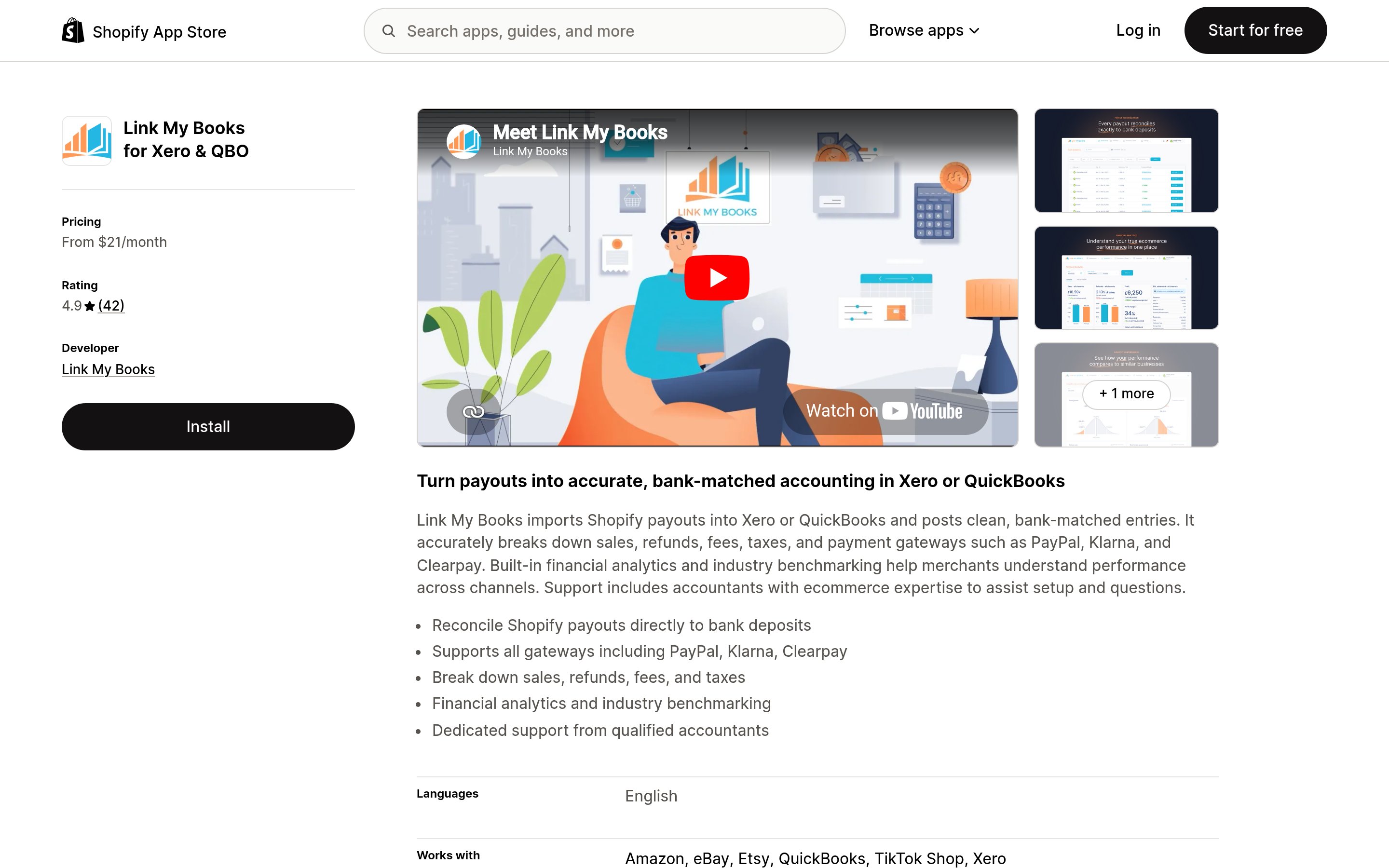
The indie pick nobody's covering: Link My Books for the bootstrapped path. UK-built by ex-ecom sellers, plugs Shopify payouts into Xero or QuickBooks Online with accurate fee, refund, and tax breakdowns. Named to the 2026 Xero App Store Power List. Much cheaper than full-service bookkeeping and meaningfully more accurate than the default Shopify-QBO connector. Pair with a $30-50/month QBO Simple Start subscription.
Graduation pick: Finaloop starting at $59/month annual, scaling with revenue. Real-time books, real humans, ecom-native. Handles Shopify Payouts, sales tax nexus, and inventory valuation natively. About 40% cheaper than the QBO + A2X + bookkeeper combo once complexity creeps in. This is Shaan Puri's pick and the post-Bench default.
For sales tax: Numeral at $75 per state-filing, $150 per state-registration. Transparent per-filing pricing wins for stores with under 10-15 state obligations. Anrok's revenue-percentage model (0.3-0.4%) gets brutal as you grow. TaxJar's $50-55/filing on top of $19-99/month is more expensive than Numeral once you're filing in three or four states.
Skip in 2026: QuickBooks Online without an ecom connector (the default Shopify-QBO sync is broken; you'll need A2X or Link My Books anyway, so price that in). Bench (gone). Avalara and Anrok unless you're SaaS (built for venture-backed software, priced accordingly). TaxJar at $99/month Pro tier (Numeral plus a CPA at year-end is cheaper).
Personalization
This is the first category I'd genuinely tell you to wait on. The lift only shows up above roughly 50K monthly visitors or $50K MRR. Below that, statistical noise eats it.
When you cross the threshold, the indie pick nobody's covering: Wiser AI by Expert Village Media. Free under 50 orders/month, paid plans from $9/month. It does AI recommendations, Frequently Bought Together, Shop the Look, and checkout upsells in one app. 4.9 stars on 668+ reviews, quietly compounding for five years instead of chasing a buyout. The fact that it sits well below Rebuy on price for an overlapping feature set is the giveaway.
The established pick: Rebuy at $99-$500/month if you're already on Shopify Plus. Rebuy's gated several features behind Plus in 2026. If you're not Plus, the math looks worse than it did 12 months ago.
Skip until you're much bigger: Nosto and Dynamic Yield are $3M+ ARR tools. Their sales motions will make that clear when you try to onboard.
Analytics and attribution
The honest pick at small scale: free. Shopify Analytics + GA4 + Sidekick Pulse (which now proactively flags anomalies and performance opportunities in admin). Under $1M GMV, this trio covers what you need. Multiple operator reviews land on the same conclusion about the paid tools: "Triple Whale's paid offering is considered a great tool, but only for companies doing over $10M in revenue per year… for a small operation it's just way overload."
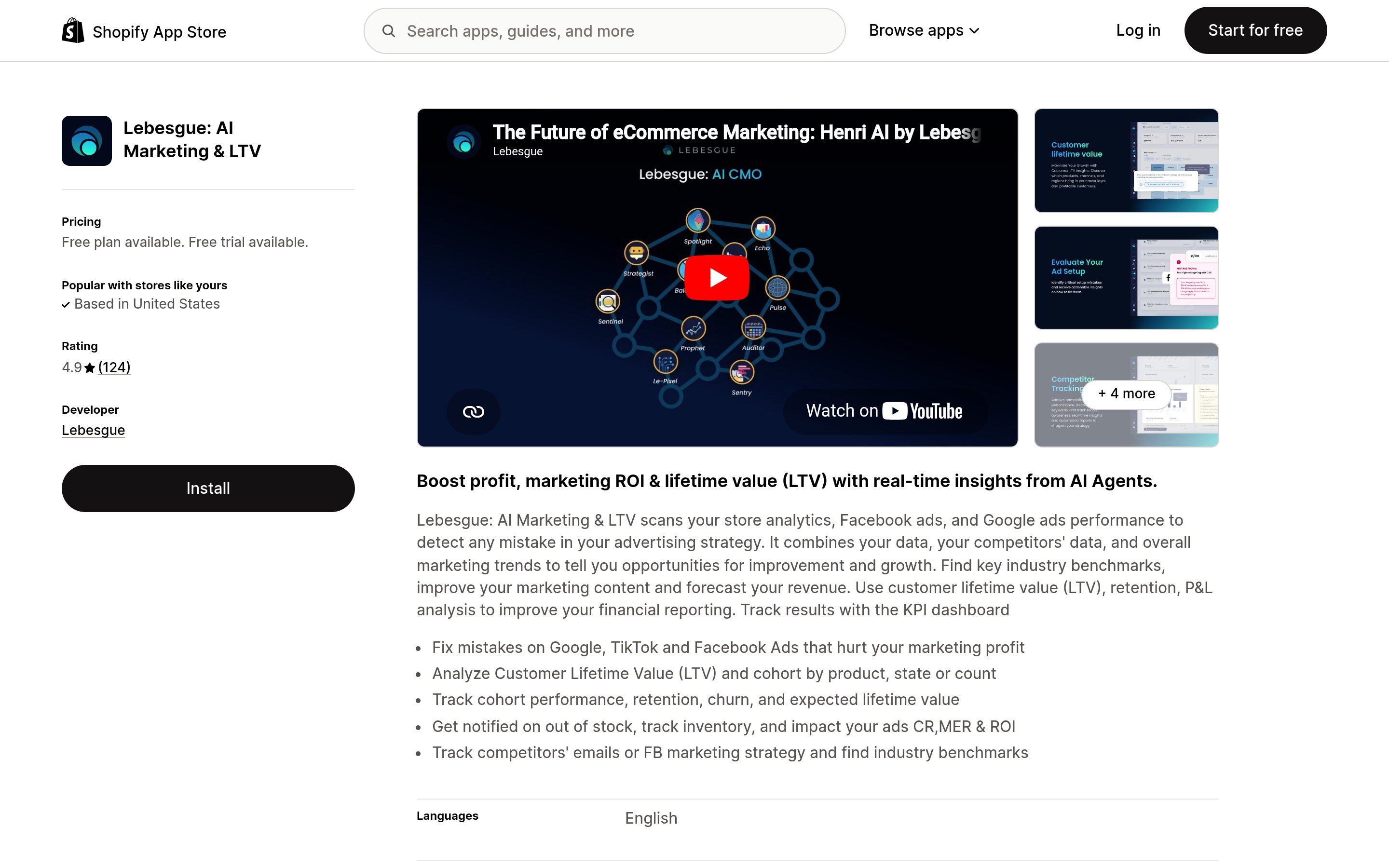
The indie pick nobody's covering: Lebesgue (AI CMO), flat-rate AI-first analytics with competitor benchmarking and Google Ads diagnostic analysis built in, designed for $100K-$1M Shopify stores. The competitor benchmarking is the differentiator; the paid mid-market tools don't include it.
Upgrade trigger: ~$30K/month in paid ad spend. Below that, the free trio is enough. Above that, Triple Whale or Polar Analytics start to earn their fees. The migration path most operators describe: free Shopify Analytics + GA4 → Lebesgue or Lifetimely at $99/month around $300K → paid Triple Whale or Polar at $3M+.
Skip in 2026: Northbeam under $5M GMV (starts at $1,500/mo). Triple Whale under $1M GMV ($429/mo at $1M, $1,129 at $6M). Polar under $1M GMV.
The dying categories (stop paying for these)
Not every "AI for ecom" category has a wait-until threshold. Some categories got killed outright in 2026 and the standard recommendations haven't updated.
Standalone A/B testing apps. Shopify Rollouts shipped Winter '26: native server-side A/B testing inside admin, zero page-speed impact, no app fee. If you're not already running formal experiments, Rollouts kills the category. Shoplift, Intelligems, and Convert still have a moat for sophisticated experimentation (element-level testing, audience segmentation, statistical rigor) but you don't need that yet.
Standalone AI copy tools. Jasper, Copy.ai, Writesonic, Hypotenuse. Shopify Magic + ChatGPT Plus covers the use case at a quarter the cost. The dedicated tools' moat collapsed when Magic added competitor URL and persona inputs.
Standalone popup apps at $20+/month. TYDAL (formerly Rivo) is free, unlimited, and now installed on 15,000+ stores. Founders are quietly dropping paid popup tools.
Mid-tier analytics under $1M GMV. Triple Whale, Polar, Northbeam. All priced for stores that don't exist at small scale. Shopify Analytics + GA4 + Sidekick Pulse is genuinely sufficient until you have meaningful paid ad spend to attribute.
AI shopping chatbots (Rep AI, Manifest AI, Tidio Lyro). These tools market double-digit conversion lifts. The lifts are real for stores with traffic; they're statistical noise below 10,000 monthly visitors. One Shopify App Store reviewer of Rep AI: "lots of confident-sounding answers that often don't actually address the question the customer is asking… not worth $550 per month for a basic LLM." Wait until the bot has enough sessions to find someone to save.
Multi-warehouse inventory forecasting platforms. Mid-market tools like Inventory Planner ($244+/month) and Cogsy ($199/month). They're solving for multi-location complexity small stores don't have. Fabrikatör covers the AI-forecasting case at small scale without the price tag.
"Agentic storefronts" outside Shopify. Real category, real direction. Shopify shipped theirs Winter '26 and that's the one to use. The third-party agentic-commerce startups aren't operator-validated yet and your distribution sits inside Shopify's pipeline anyway.
Anything that requires a Calendly link in the onboarding flow. If the tool needs a 30-minute setup call with a customer success rep, it's not built for a small brand. You're not the customer profile they're optimizing for.
What the stack actually costs
Real 2026 monthly numbers, not promotional pricing:
Marketing and growth stack:
Shopify Email. Free under 10K sends/month, $1 per 1K after. Email campaigns + flows.
Shopify Knowledge Base. Free. AI-agent answers + agentic-search distribution.
Lily AI. Variable (custom). Product attribute enrichment for AI search.
Photoroom Pro. $12.99/month ($7.50 annual). Product photography.
ChatGPT Plus. $20/month. Copy, descriptions, ad concepts.
Pippit. ~$10-30/month. TikTok and Reels ad video.
Postiz. $23-79/month. AI-agent social scheduling.
Junip. Free tier. Product reviews.
Shopify Search & Discovery. Free. On-store search.
Shopify Inbox. Free. Customer chat.
Meta Advantage+. Free. Ad optimization.
Operations and finance stack:
Fabrikatör. $99/month under $500K annual revenue. Inventory, restock alerts, PO automation.
Pirate Ship. Free. Shipping labels.
ReturnPrime. Free tier. Returns management.
Link My Books + QBO Simple Start. ~$47/month combined. Bookkeeping.
Numeral. $75 per state-filing as needed. Sales tax.
Total: roughly $40 to $90/month for the marketing stack, plus $50 to $150/month for the ops stack once you cross the volume that needs it (Fabrikatör is the biggest variable; below ~$500K annual revenue you can still get by on free Shopify-native inventory until Stocky finally dies in August 2026).
Compare to a full marketing stack (Klaviyo + Postscript + Gorgias + Triple Whale + AdCreative + Rebuy) at $700 to $1,200/month before SMS credits, plus a legacy ops stack (Stocky + Loop + Bench-replacement + Avalara) at another $400 to $800/month. Most of that spend has a free Shopify-native replacement or a 90%-cheaper indie pick that didn't exist 12 months ago.
Real operator stack threads worth reading
The richest 2026 sources are X stack-reveal threads from real operators. A starting set:
Shaan Puri's ecom stack thread (@ShaanVP). The canonical "here's everything I use" thread, with the caveat that he discloses equity in some of the tools.
Simple Modern's stack via Olivia Kory (@oliviaakory). Mike Beckham's DTC tech stack reveal: Shopify, Replo, Encore 3PL, NetSuite, Gorgias, Siena AI, Recart. The "slowly and thoughtfully" framing is the right counter-energy to AI-tool-sprawl panic.
Mark Yeramian recommending Shopscan (@yeramianm): "Paste any Shopify store and see their entire stack. You don't even need to create an account." The fastest way to research what real stores use.
Greg Isenberg on AI product mockups as a $100K/mo SaaS opportunity (@gregisenberg). Useful forward-looking signal that the AI product photography category is still wide open in 2026.
Worth doing yourself: 30 minutes of X native search with "my Shopify stack" since:2025-01-01, from:@soundslikecanoe stack, and "this is everything I use" Shopify. Web search doesn't index those threads well, but they're the highest-signal source I've found.
Before you buy any AI tool: a quick checklist
Is this tied to a transactional moment (image, search, email, ad, support) or to AI-agent discoverability (Knowledge Base, Lily AI attributes)? If no, deprioritize.
Would my revenue actually change if I stopped using this tomorrow? If I can't answer with confidence, the tool isn't earning its money.
Is the free or Shopify-native option genuinely worse, or just marketed as worse? Check directly. Most of Winter '26's releases broke the "you need a paid app for this" narrative.
Does the pricing scale with my volume or with my vendor's confidence? If their "Pro" plan exists because they need it to, not because I need it, walk.
Is there a Calendly link in the onboarding flow? If yes, I'm not the customer.
Conclusion
The 2026 version of this post is shorter than the 2025 version would have been. Yotpo died. Sendlane got absorbed. Klaviyo got more expensive. Shopify Winter '26 made about a third of the old "must-have apps" obsolete.
The stack you need now is three to five tools, not twenty-five. Mostly Shopify-native, with one or two indie picks per category that real operators are quietly using. The total bill sits between $40 and $90 a month. The biggest mistake you can make right now is to follow a 2024 recommendation list. Half the brands on it don't exist anymore.
When your revenue makes the harder tools earn their keep, you'll know. Until then, the cheapest thing you can do for your store is install Knowledge Base, write your FAQs into it, and let the agentic-commerce traffic find you.
Frequently asked questions
What's the cheapest AI tool stack for a Shopify store in 2026?
Roughly $40-$90/month depending on photo volume and which video/social tools you use. Core stack: Shopify Email (free under 10K sends/month), Shopify Knowledge Base (free), Lily AI for product attributes, Photoroom Pro for product photography ($12.99/month), ChatGPT Plus at $20, Pippit for ad video (~$10-30), Postiz or Buffer for social (~$6-79), and Shopify's native tools (Search & Discovery, Inbox, Meta Advantage+) for free. Everything is tied to either a transactional moment (image, email, search, ad, support) or to making your products discoverable inside ChatGPT and Perplexity via Knowledge Base and Lily AI.
Do I still need Klaviyo as a small Shopify store in 2026?
Probably not. Shopify Email got significantly better in Winter '26: 10K free sends/month, Sidekick generates campaign copy in admin, and the flow editor handles the four standard flows (welcome, abandoned cart, browse abandonment, post-purchase) that drive most email revenue. For most stores under 2,000 active profiles, Shopify Email is now enough. Omnisend at $16/month is the next step if you want SMS bundled. Klaviyo is worth the cost above $500K GMV when their flows and predictive features start outperforming the cheaper options enough to offset the active-profile billing model.
What's Shopify Knowledge Base and why does it matter?
Knowledge Base is a free Shopify app that shipped in Winter '26. It lets you control what AI agents (Shopify Inbox AI, ChatGPT, Perplexity, Microsoft Copilot) say about your store, and tracks which questions agents are asking about your catalog. It matters because Shopify reports AI-referred orders grew 13x year-over-year in Q1 2026 and convert 56% better than organic SEO across most categories. Knowledge Base is the layer that decides whether your store participates in agentic-commerce traffic.
Should I pay for an AI chatbot on my Shopify store in 2026?
For most small stores, no. Pre-purchase AI shopping chatbots (Rep AI, Manifest AI, Tidio Lyro) need roughly 10,000+ monthly visitors to find enough sessions to save. Below that, they're statistical noise. For customer support, Shopify Inbox + Knowledge Base (both free) cover small-store volume. Write a great FAQ page, feed it to Knowledge Base, let the AI agents handle the rest. Switch to a paid helpdesk like Gorgias only when support eats more than 90 minutes a day or you cross 300 tickets a month.
What AI tool categories should I skip entirely in 2026?
Standalone A/B testing apps (Shopify Rollouts is native), standalone AI copy tools like Jasper or Copy.ai (Shopify Magic + ChatGPT Plus covers it), standalone popup apps at $20+ (TYDAL is free and on 15K+ stores), mid-tier analytics under $1M GMV (Shopify Analytics + GA4 + Sidekick Pulse is sufficient), AI shopping chatbots under 10K monthly visitors, AI inventory forecasting if you don't have 12+ months of clean SKU data, and any tool with a Calendly link in the onboarding flow.
How much should a small Shopify store spend on AI tools per month?
Roughly $40-$90/month covers the marketing and growth stack. Add another $50-$150/month once you cross the volume that needs proper inventory and bookkeeping tooling (Fabrikatör, Link My Books, occasional Numeral state filings). The $700+/month full-stack setup is built for stores at $1M+ revenue. Spending more than $200/month on AI tools before you're consistently profitable is buying tools to solve problems you don't have yet.
What do I actually use for inventory and bookkeeping if Stocky is dying?
For inventory, Fabrikatör at $99/month is the named Stocky successor across every credible migration guide. Shopify-native, AI forecasting, automated POs. For bookkeeping, Link My Books at ~$17/month plugs Shopify payouts into QuickBooks Online (or Xero) with accurate fee, refund, and tax breakdowns. When complexity grows, Finaloop is the ecom-native graduation pick at $59/month and up. For sales tax, Numeral is the cleanest pricing model at $75 per state-filing; flat fees beat the percentage-of-revenue models from Anrok and Avalara at small scale.