10 Domain Name Tips Every Brand Needs in 2026
Discover 10 smart domain name tips every brand needs in 2026. Learn how to choose the right domain extension, avoid common mistakes, protect your brand, and build a stronger online presence.
Let's be honest, your domain name isn't just a technical detail anymore. In 2026, it's one of the first things people notice about your brand. Before they click, before they read, before they trust you, they see your domain.
A bad domain creates instant doubt. A great one builds instant credibility. And in a crowded digital space, that split-second judgment can make or break whether someone stays or leaves.
This guide gives you 10 practical tips to get it right from the start.
Why your domain name matters more than you think
Most brand owners obsess over their logo, their colors, their product photography and treat the domain name as an afterthought. That's a mistake.
A GoDaddy survey of 1,500 consumers found that 80% avoid websites with oddly spelled domain names and nearly 4 in 10 Gen Z shoppers have stopped doing business with a brand because of its domain. Your domain affects three things that directly impact your business:
Trust: a professional, clean domain signals legitimacy. A strange or overly complex one raises red flags before anyone even lands on your page.
SEO: your domain is one of the first signals Google reads when evaluating your site. A clear, relevant domain helps search engines understand what your brand is about.
Brand recall: if someone hears your domain and can't remember it five minutes later, you've already lost them. A memorable domain is free marketing every time someone types it, shares it, or mentions it out loud.
In 2026, over 300 million domains are registered worldwide. Standing out starts before your homepage even loads.
The most important extensions in 2026
Not all domain extensions are created equal. Here's what actually matters in 2026 and when to use each one.
.com: still the gold standard. Over 300 million .com domains are registered worldwide, and it's the first extension people type by instinct. If your .com is available, take it. If it's not, think carefully before settling for something else, people will type .com out of habit and land on someone else's site.
.io: the go-to for startups and SaaS companies. It reads as tech-forward and modern. Brands like Notion and Linear helped make it feel legitimate. Still strong in 2026, but increasingly crowded.
.ai: exploding in popularity with the rise of AI tools and products. Average resale prices have hit $239K, which tells you everything about how valuable this extension has become. If your brand has anything to do with AI, this is worth considering.
.shop / .store: purpose-built for e-commerce. They signal immediately what your brand does, which can help with first impressions and conversion. Good option if your .com isn't available and your business is purely retail.
.co: short, clean, and business-friendly. Works well for startups that want something minimal and modern without straying too far from the familiar.
Country-specific extensions: if you're targeting a local market, a ccTLD like .uk, .de, or .fr can boost trust with local audiences and help with local SEO. Just make sure you're not limiting your global growth potential.
You can register any of these on GoDaddy, Namecheap, or Porkbun compare prices before you buy, they vary more than you'd think.
10 tips for choosing the right domain
This is the part that actually matters. Here's what separates a domain that works from one that quietly hurts your brand.
1. Keep it short and simple
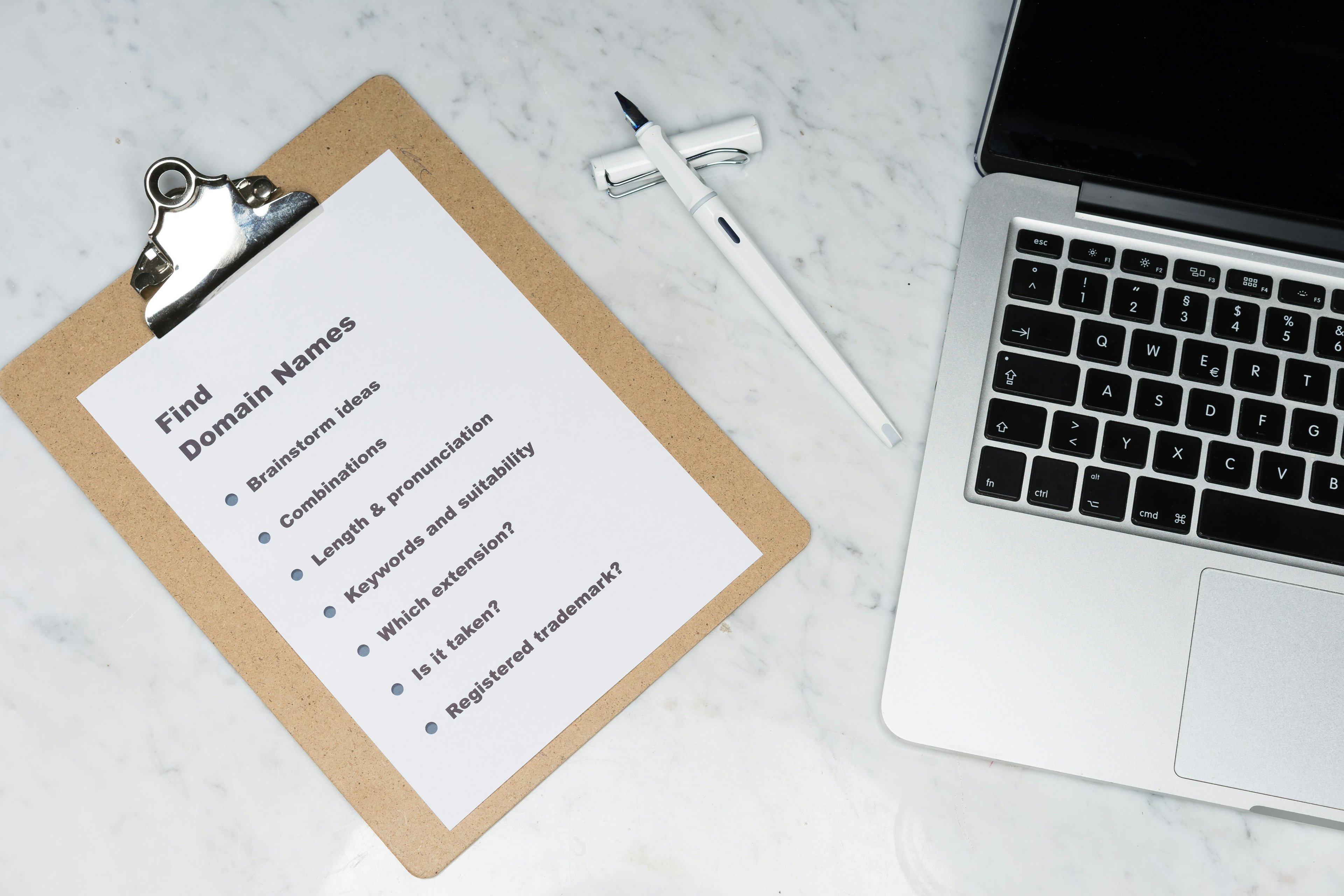
The shorter the better, two words is the sweet spot, easy to say, easy to type, easy to remember. If you have to spell it out every time someone asks for your website, it's too long.
2. Make it brandable
Your domain should sound like a brand, not a keyword. "StyleHaus.com" beats "bestfashionclothingstore.com" every time.
Brandable domains are easier to remember and harder to confuse with competitors.
3. Always go .com first
If your .com is available take it. People type .com by instinct. If your brand is "Luna" but you registered "luna.co," a chunk of your traffic will land on luna.com instead.
Check availability on Namecheap or GoDaddy before you fall in love with a name.
4. Avoid hyphens and numbers
"best-style-shop.com" is hard to say out loud and looks untrustworthy. Numbers create the same problem is it "4" or "four"? Both kill brand recall before you even launch.
5. Make it easy to spell and say out loud
Say your domain out loud to someone who's never heard it. If they spell it wrong when they try to find you, pick a different name. This is called the radio test, and it's one of the most useful filters you can run.
6. Don't use trends that will date your brand
Avoid anything too tied to a current moment slang, memes, or overly niche references. Your domain needs to work in five years, not just right now. Think long-term when you build your brand identity.
7. Check trademark availability
Before you register anything, search the name on USPTO (US) or your local trademark database. Using a trademarked name even accidentally can cost you the domain and your brand down the line.
8. Match your social media handles
Your domain and your social handles should be consistent. If "StyleHaus.com" is taken on Instagram, that's a problem. Check availability across platforms before you commit tools like Namecheckerr do this in seconds.
9. Think beyond your niche today
If you plan to expand, don't box yourself in. "ManchesterCakes.com" works until you start shipping nationally. Pick a name that gives your brand room to grow without needing a rebrand.
10. Act fast, good domains don't wait
Once you find the right name, register it immediately. Good domains get picked up fast, and waiting even a day can mean losing it. Register on Porkbun, Namecheap, or GoDaddy and always set it to auto-renew so you never accidentally lose it.
Where to Buy Your Domain
Once you've settled on a name, the next step is registering it. Here are the most reliable options in 2026:
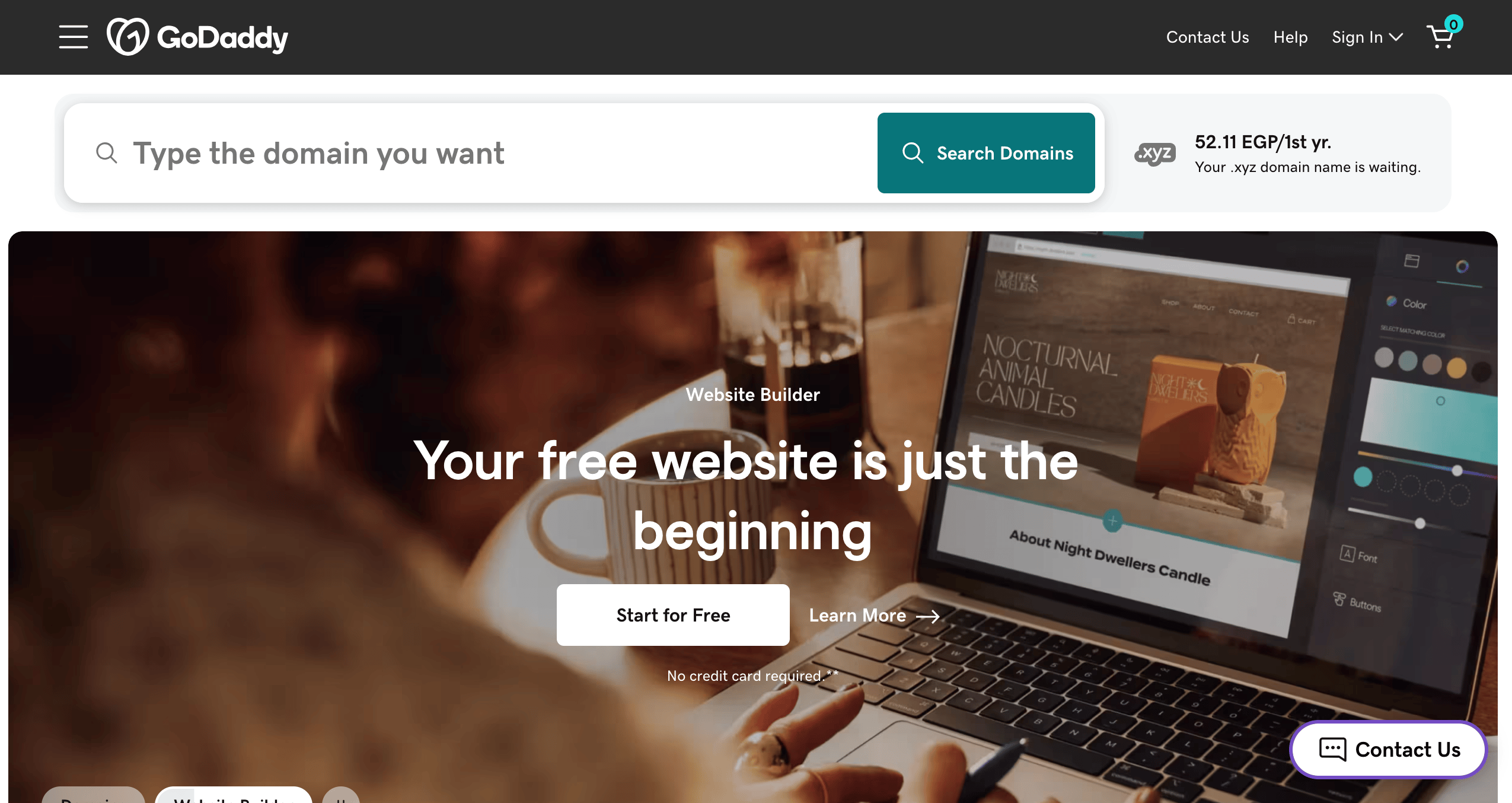
GoDaddy: the biggest name in domain registration. Easy to use, massive inventory, and good customer support. Prices can be higher than competitors, especially on renewal, so read the fine print before you commit.
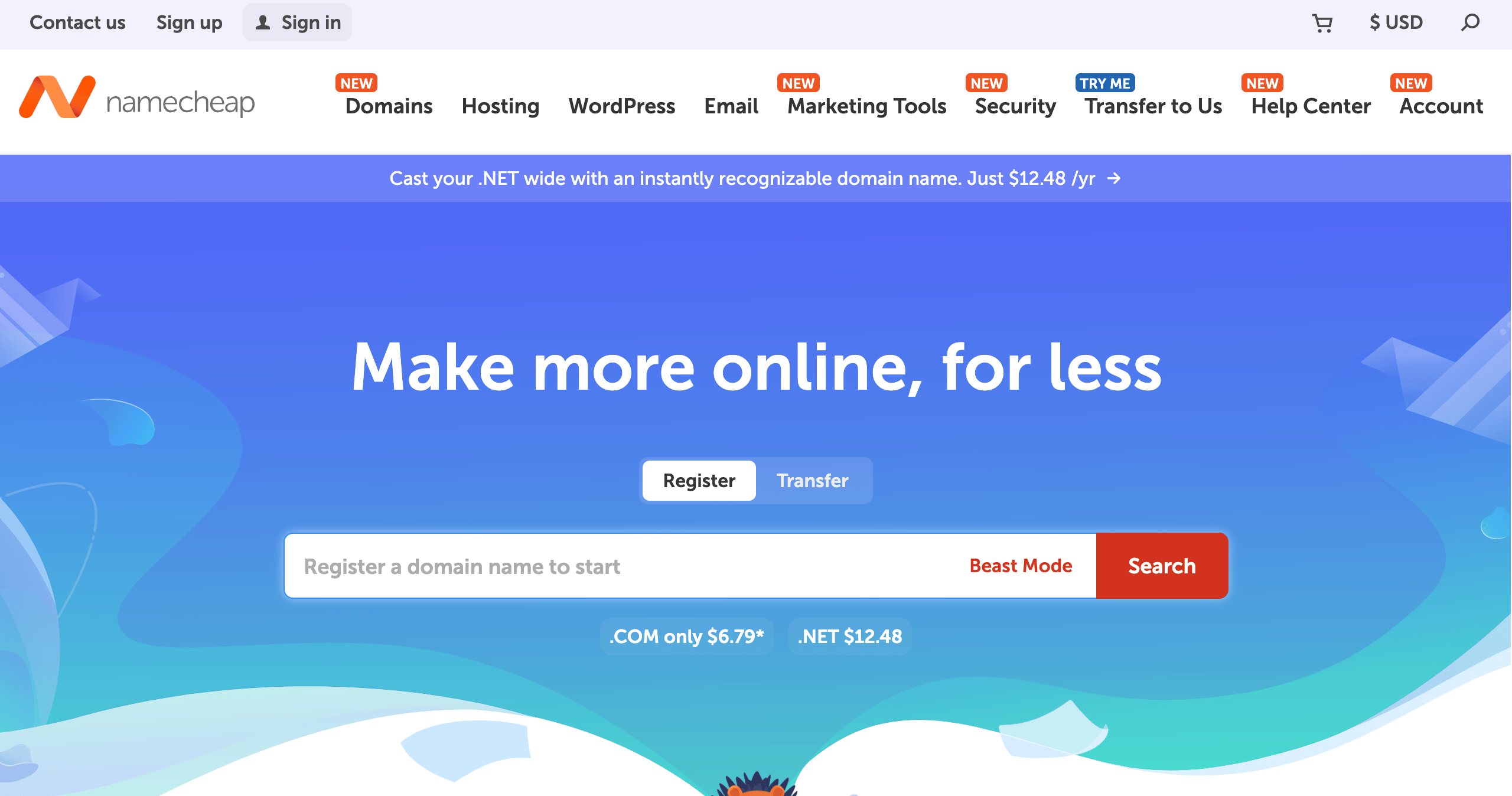
Namecheap: consistently cheaper than GoDaddy, especially for .com renewals. Clean interface and straightforward pricing with no surprise fees. A solid choice for most small brands.
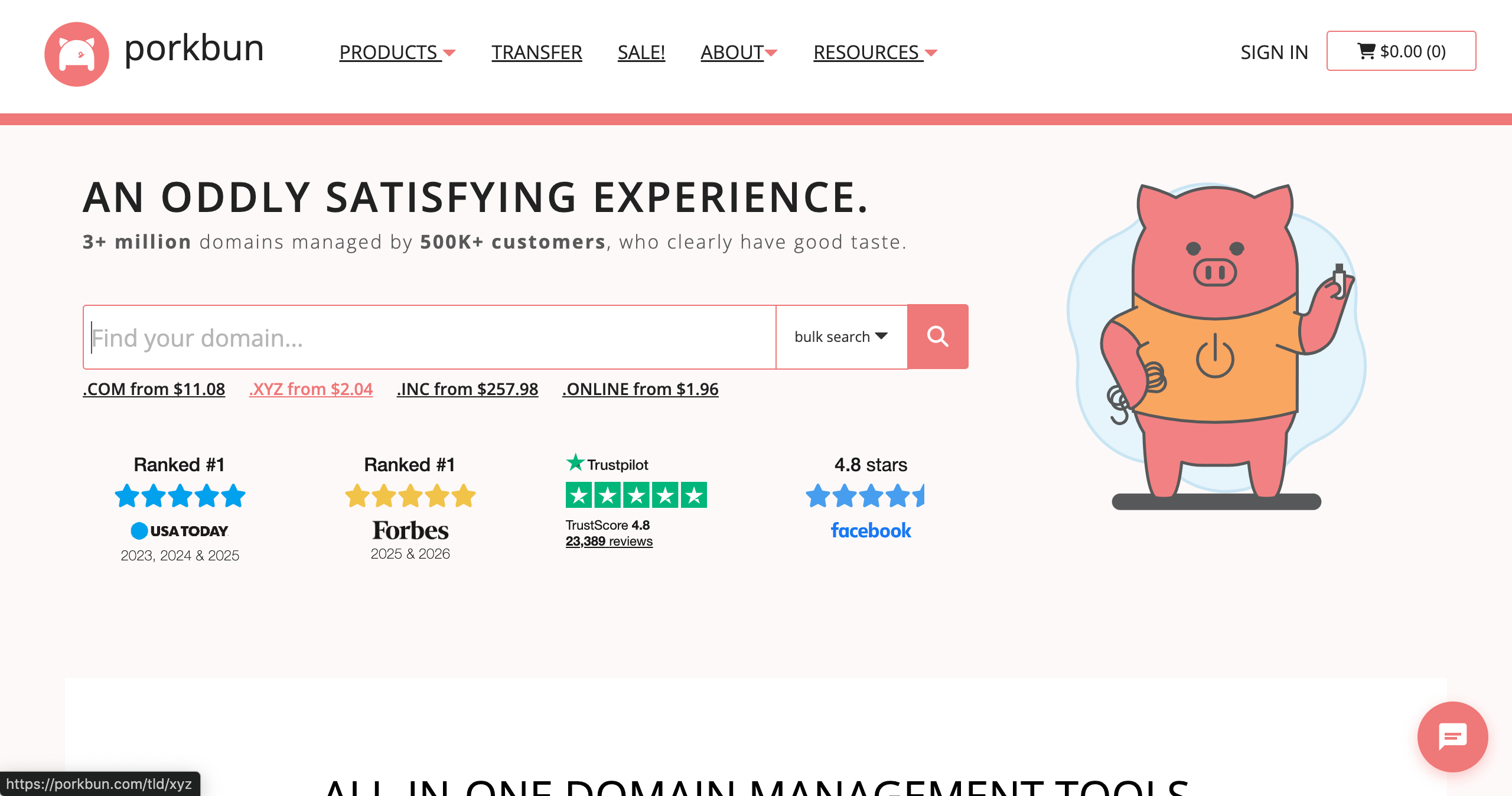
Porkbun: the best prices on newer extensions like .ai, .io, and .shop. Less well-known but fully reliable. Worth checking if you're going for a non-.com extension.
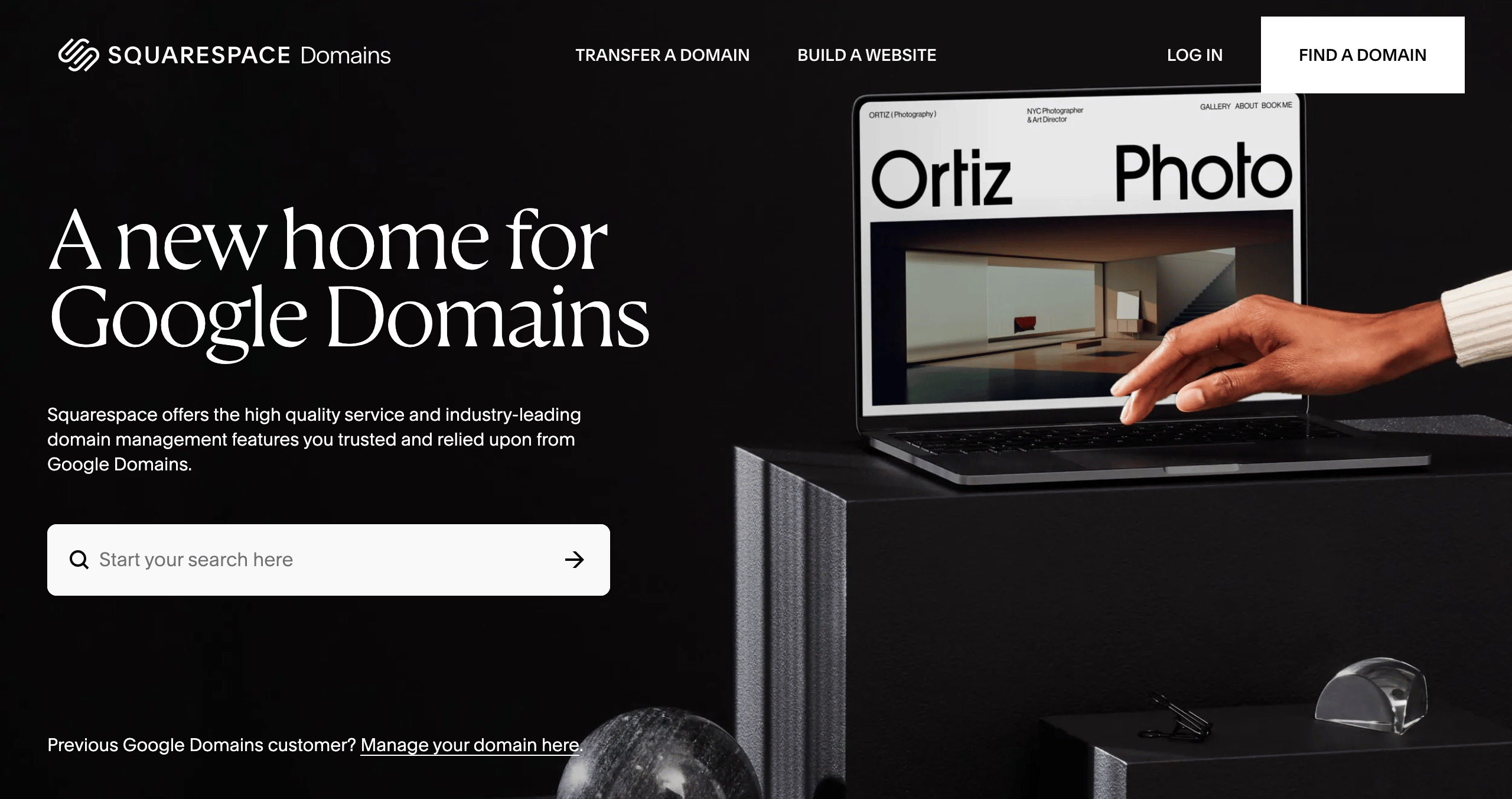
Google Domains: simple, transparent pricing and easy integration with Google's tools. Good option if you're already deep in the Google ecosystem.
A few things to always do when you register:
Set auto-renew on immediately: losing a domain you've built brand equity on is a painful and avoidable mistake
Enable domain privacy: this hides your personal contact info from public WHOIS records
Register for at least 2 years: it's a minor trust signal for Google and protects you from forgetting to renew
FAQ
What if someone is already using my brand name as a domain?
Check if it's trademarked first using USPTO. If it's not, and the domain is parked or inactive, you can make an offer through Sedo or Afternic. If it's actively used by another business, choose a different name, it's not worth the confusion.
Should I buy multiple domain extensions?
If your brand is growing and your .com is valuable, yes buy the most common variations (.co, .net) to protect your brand from typosquatters and competitors. But don't overthink it at the start. Secure your primary domain first.
Does my domain name affect my SEO?
Directly, less than it used to. But indirectly, yes a clean, memorable domain gets more clicks, more direct traffic, and more backlinks over time. A keyword in your domain can help, but relevance and quality of your content matter far more.
How much should I spend on a domain?
A standard .com costs $10–15 per year. Premium domains short, dictionary words or high-demand names can cost thousands. For most new brands, spending more than $50 on a domain isn't necessary. Invest in your brand first, and upgrade later if needed.
What's the difference between a domain and hosting?
Your domain is your address what people type to find you. Hosting is where your website actually lives. You need both, but they're separate services. Platforms like Shopify bundle both together, which makes things simpler for e-commerce brands.
Conclusion
Your domain name is a small decision with a long tail. Get it right and it becomes one of the most valuable assets your brand owns easy to find, easy to remember, and impossible to confuse with someone else.
Keep it short. Keep it clean. Go .com if you can. And once you find the right name, don't wait register it today and set it to auto-renew.
That's it. Your brand's online home starts here.