Why Most New Brands Fail in Their First Year
Why do most new brands fail in their first year? The 5 real reasons with stats, honest advice, and steps to survive.
Most new brands don't fail because they're bad. They fail because they miss what actually matters at the exact moment it mattered most.
According to the U.S. Bureau of Labor Statistics, 20.4% of businesses fail in their first year, 49.4% within five years, and 65.3% don't survive a decade. Commerce Institute The real question isn't how many fail, it's why, and whether it's predictable enough to avoid.
It is. Almost always.

1. You built something nobody actually needed
This is the most common reason: 42% of startups fail because there's no market need for their product.
A founder spends months building based on a feeling, a trend, or what their friends said sounded cool. They launch. Nothing happens. The problem isn't the execution, the product itself was built on fake demand.
Fake demand looks like thousands of saves on a mood board, Instagram comments saying love this!, and five people who said they'd definitely buy but never did.
Likes ≠ demand. Compliments ≠ willingness to pay.
There's a well-known test called the Sean Ellis Test: if at least 40% of your early customers would be very disappointed without your product, you have real fit. Below that you're building on sand.
Harvard Business Review recommends heat-testing measuring actual behavior through real ad clicks, not surveys because people who click show intent, not just politeness.
Test a limited drop before committing to inventory. Talk to strangers, not friends. The market will always tell you the truth.
2. You ran out of cash
Startups don't die when money runs out. Money runs out when strategy is broken.
29% of startups fail because they run out of cash but that's a symptom, not a cause. The real culprits: pricing that ignores true cost of goods, scaling before unit economics make sense, and spending on ads or inventory before the core loop is proven.
Pricing and cost miscalculation alone accounts for 18% of startup failures.

It usually plays out like this: strong early demand → scale production → CAC rises as the audience expands → the margin that worked at 100 units collapses at 1,000 → cash-negative by month 8, despite growing.
Know your granular numbers. Cost per unit. Cost per acquisition. Return rate. Margin after all fees. Most founders who run out of cash knew something was wrong months earlier and chose optimism over adjustment.
3. Your marketing got ignored
You can have the best product in the category and lose to a brand with average quality and exceptional visuals. That's how attention works now.
Poor marketing contributes to 14% of startup failures but it's usually misdiagnosed as "not enough traffic" when the actual problem is perception.
A simple test: could any of your top three competitors post your content and have it fit their feed? If yes you don't have a brand, you have a product with a logo on it.

9 out of 10 online shoppers consider high-quality product photos one of the most important purchasing factors. High-quality photos had a 94% higher conversion rate than low-quality ones meaning the same item can sell nearly twice as well based on imagery alone.
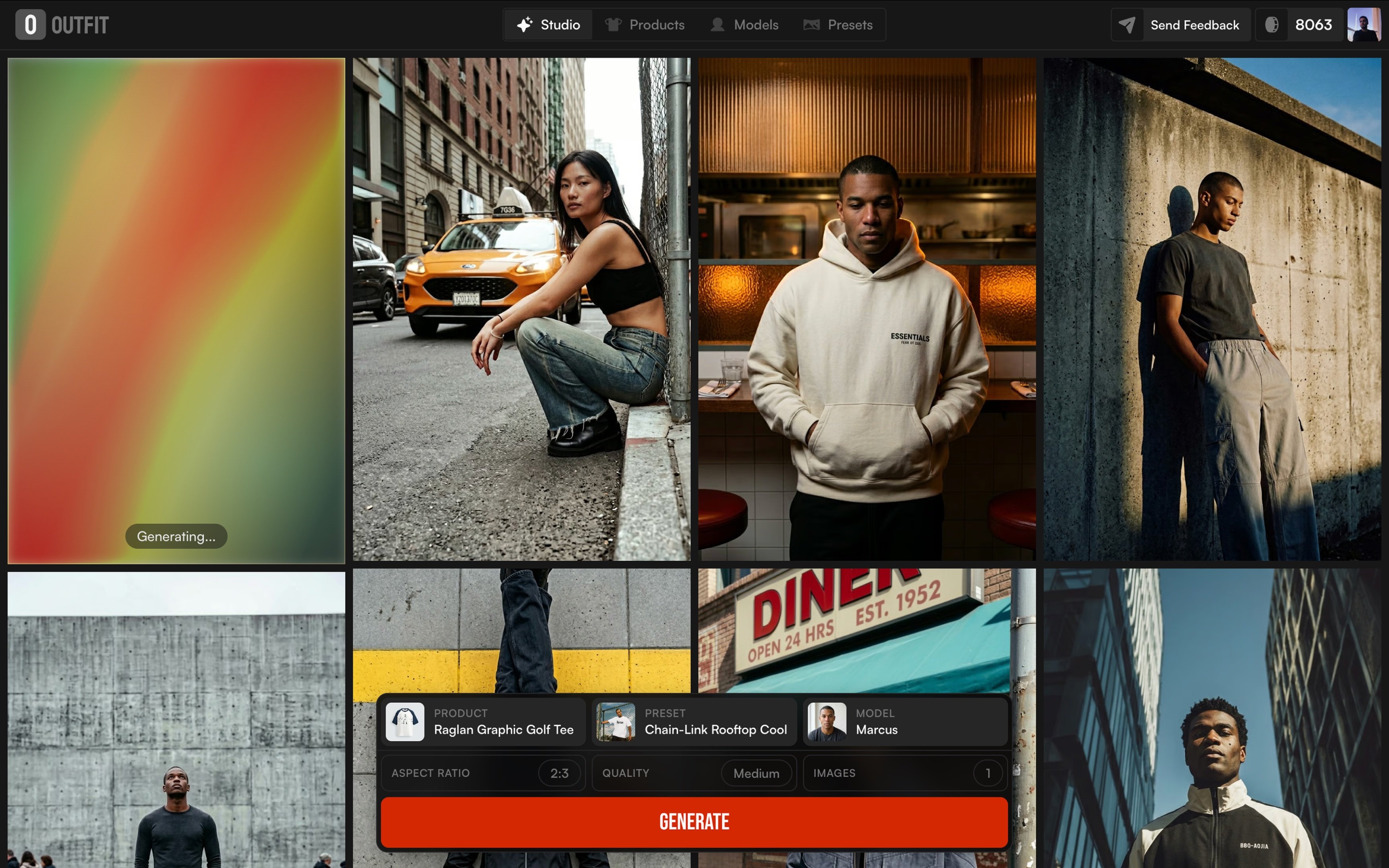
The fastest-growing small brands invest disproportionately in how they show up. For clothing brands, AI-generated product photography has made that level of quality accessible without the cost or timeline of a traditional shoot.
4. Your team wasn't built for execution
23% of startups fail because of the wrong team. 82% fail due to leadership or management issues.
The most dangerous version: a founder who's excellent at one thing design, product, creative and assumes that skill carries the whole business. It doesn't. Sales, operations, customer service, and marketing all need to happen consistently, not just when the founder has bandwidth.

Early warning signs: 14-hour days and still falling behind. Emails going unanswered. Missing shipping deadlines. Dreading your inbox.
The fix isn't always hiring. It's being honest about what the business needs versus what you enjoy then building systems around the gaps before they become crises.
5. You failed to adapt fast enough
Being outcompeted accounts for 19% of failures most likely when a brand is between three and five years old, often right as they're trying to scale. Poor timing accounts for another 10%.
Markets move. Algorithms change. A trend working in Q1 can be tired by Q3. The brands that survive aren't the ones with the best original idea, they're the ones with the fastest feedback loops.
The trap: most brands see the warning signs months before they act. They keep hoping the numbers turn. They rarely do on their own.
The hidden killers
Wrong platform or channel. For fashion brands, whether to start on your own website or a marketplace is one of the highest-leverage early decisions.
Ignoring feedback. Every complaint is a free product brief. Founders who dismiss it consistently miss their clearest signal for what to fix next.
Supplier dependency. A single supplier is a single point of failure. One delay can wipe out your peak season.
Legal gaps. Trademarks, supplier agreements, and return policies that aren't airtight become expensive lessons.
When should you pivot?

Three signals it's time:
No traction after 3 months of genuine effort: The problem is likely the offer, not the execution.
CAC keeps rising while conversion stays flat: That's a product-market fit issue, not a marketing one.
Customers are confused about what you do: If you're explaining your value proposition twice in every conversation, the positioning isn't working.
How to survive your first year
Validate before you build. Prove demand before you invest in supply: Shopify's product-market fit framework is one of the most practical guides for physical product brands.
Control your burn: Know your runway. Know your unit economics. Treat cash like it's the only resource you can't recover because in year one, it is.
Invest in perception early: High-resolution images alone result in a 33% higher conversion rate. There's no longer a budget excuse for launching with weak visuals, the tools exist to do it affordably from day one.
Build fast feedback loops: Talk to customers every week. Track numbers every day. Decide from data, not from how you feel about the week.
Stay flexible on purpose: Commit to goals, not tactics. The market will change, your approach needs to change with it.
The bottom line
Brands don't fail overnight. They fail through small, ignored mistakes compounding quietly until there's nothing left to save.
Every failure in this article is visible in advance. The question is whether you're looking and whether you're willing to act before it's too late.
Year one is about learning faster than you're burning. About building perception before the budget justifies it. About staying honest when the numbers say something you don't want to hear.
The brands that make it aren't the ones with the best ideas. They're the ones who treated every signal as data, every failure as feedback, and every decision as part of a system not just a product.